Guglielmo Marconi Airport integrates environmental sustainability into its development model, through concrete actions targeting decarbonisation, energy efficiency and protecting biodiversity.
Bologna Airport aims to reach “Net Zero Carbon” by 2030, reducing direct and indirect emissions (Scope 1 and Scope 2) by at least 90% compared to 2010 and offsetting the residual emissions it does not directly control but which relate to the Group's activities throughout the value chain (Scope 3).
The Airport has achieved Carbon Accreditation level 4+ “Neutrality”. The ACA is an international programme that certifies airports for managing, reducing and offsetting carbon emissions, recognising their Environmental Sustainability level.
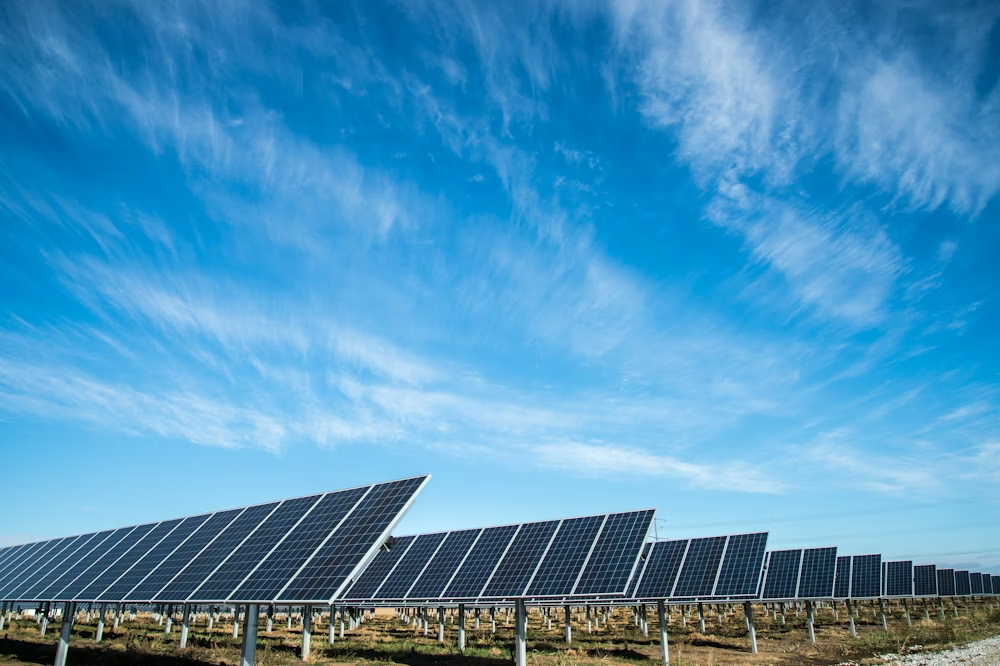
The electricity used by Bologna Airport comes entirely from certified renewable sources. In 2025, two new photovoltaic systems were installed, while a plan to build a 4.4 MW plant with over 9,500 panels was also approved. This will be located on an area of around 30 hectares north of the runway.
Biodiversity is protected through monitoring of the fauna and flora in the airport surroundings and environmental remediation. The key initiatives carried out include the completion of the wooded strip north of the airport, which involved the forestation of 39 hectares of land (equal to approximately 56 football pitches) and the planting of nearly 28,000 trees. This work consists of creating a green lung with a dual function: absorbing carbon dioxide and enhancing the landscape.
The airport promotes sustainable mobility solutions through intermodality and the MaaS (Mobility as a Service) project developed with key local stakeholders. This integrates public and private transport including buses, trains, the People Mover, car-sharing and bike-sharing.
In 2025, work continued on the two sections of the Ciclovia del Sole - Eurovelo 7 bike path and the project to expand the BLQ Bike Station began.
Collaborations with Marconi Express and Tper continue to facilitate access to the airport via public transport.
The airport constantly monitors air quality using control units installed in the area. This approach is designed to monitor pollutant concentrations and support mitigation measures.
Particularly because it operates in a water-stressed area, Guglielmo Marconi Airport also pays close attention to water management. In 2025, the project to supply water for non-potable uses continued.
Guglielmo Marconi Airport promotes circular economy models through numerous initiatives. Four key examples of this approach include: reduced usage of single-use plastic at sales points; the recovery of cargo packaging; redistribution of surpluses from food&beverage outlets and other commercial establishments at the airport, which are subsequently donated to local organisations and associations; valorisation and recovery of organic waste.
 ita
ita
 eng
eng