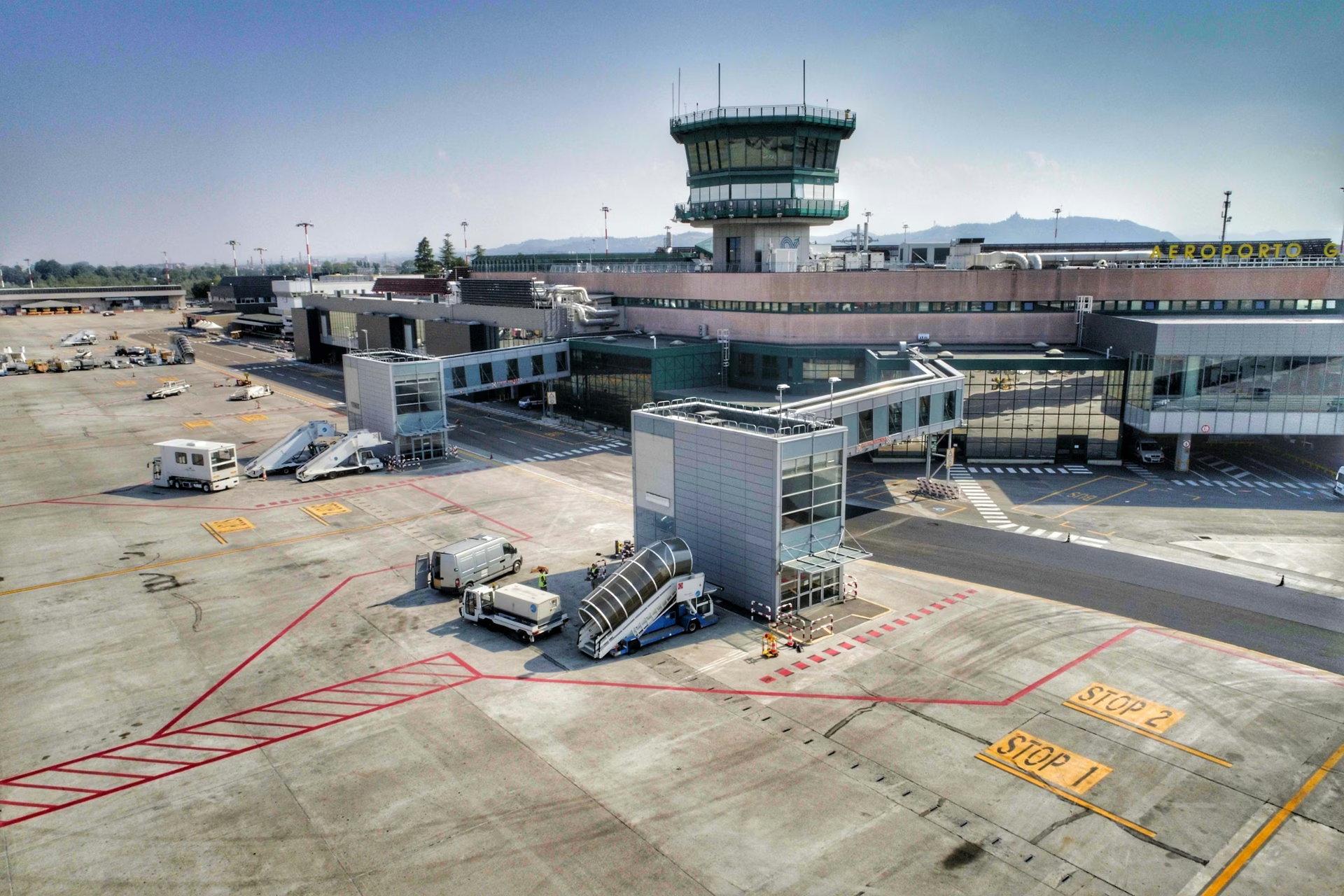
The airport adopts a growth model that is based on sustainability, innovation, service quality and economic development.
In 2025, the airport generated a significant economic impact on the area, contributing to economic growth and job creation through activities directly and indirectly related to the airport.

Innovation constitutes a strategic driver of growth. The 2026-2030 Innovation Plan defines the main development lines. It entails the active involvement of various business functions through collaborative initiatives and programmes for shared idea generation.
allow liquids in containers of up to two litres to be carried in carry-on baggage, speeding up security screening and improving overall service quality
Cyber security is ensured by advanced, 24-hour systems that enable continuous threat monitoring and rapid incident management. Periodic audits are also carried out to verify regulatory compliance and the effectiveness of the measures taken.
We maintain high standards of user satisfaction through inclusive services and state-of-the-art infrastructure. In this area, particular attention is paid to passengers with reduced mobility, who represent a constantly growing traffic segment.
The commitment to create a sustainable supply chain is an integral part of Guglielmo Marconi Airport's Sustainability Plan and is reflected in several initiatives, including: monitoring the degree of ESG maturity of suppliers through the SynESGy platform, verifying the adoption of ethical and sustainable conduct by means of periodic audits, promoting safety training programmes, and introducing reward criteria in tenders for companies with exceptional ESG performance. One figure above all reflects this commitment: 92% of tenders included supplier screening based on ESG criteria.
 ita
ita
 eng
eng